


THEATRE TRAINING
Training pathways in theatre,
The NCCA Theatre Department offers specialized training pathways that connect theatre practice with education, facilitation, creative development, and community engagement. These courses are designed for teachers, artists, youth leaders, practitioners, children, and young people who want to use theatre as a tool for expression, learning, dialogue, and positive change.
View More
Have Any Questions?
+962-6-5690292
ABOUT THE COURSES
Training rooted in practice, participation, and impact
NCCA’s theatre training programs are shaped by decades of work in performance, arts education, and interactive facilitation. Rather than treating theatre as a narrow technical discipline, these courses approach it as a powerful language for communication, imagination, personal growth, and community engagement.
Each pathway responds to a different group of learners and practitioners. Some focus on facilitation and social dialogue, others on artistic development for children and youth, and others on bringing drama directly into classrooms. Together, they form a coherent training ecosystem within the Theatre Department.

ABOUT THE COURSES
Main Training Pathways
Theatre Based Techniques (TBT)
An advanced training pathway for educators, youth leaders, artists, and practitioners who want to use interactive theatre as a tool for awareness, advocacy, facilitation, and community dialogue.
Theatre Arts Training for Children & Youth
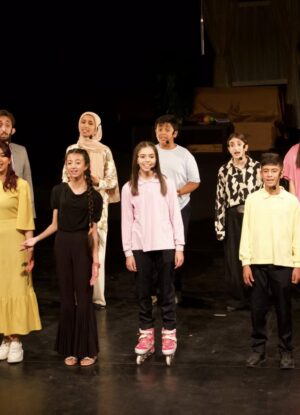
Creative theatre training for children and young people in acting, improvisation, movement, voice, mime, storytelling, and stage expression, designed to build confidence and artistic skill.
Drama in Education & Theatre Arts Techniques Training Courses for Teachers
Structured teacher-training courses that help educators integrate drama and theatre arts techniques into classroom learning, using creativity and participation to enrich education.
ABOUT THE COURSES
HOW WE TEACH
1
NCCA training is practical, participatory, and experience-based. Learners are invited to explore, experiment, and respond, rather than simply receive information. This creates an environment where theatre techniques are understood not only intellectually, but physically, emotionally, and socially.
2
Courses are built around the idea that creativity is strengthened through interaction. Participants learn by doing: through role play, improvisation, group work, facilitation exercises, scene-making, reflection, and performance-based exploration.
3
This training philosophy allows learners to develop both artistic confidence and transferable skills. It also reflects NCCA's broader mission of using the arts to strengthen education, communication, inclusion, and human development.
ABOUT THE COURSES
WHY TRAIN WITH
NCCA
A department shaped by practice
These programs are delivered within a theatre department that has long combined performance, community engagement, and educational outreach. Training is not isolated from practice; it grows directly from lived artistic and institutional experience.
A bridge between art and impact
NCCA training courses show how theatre can move beyond the stage into schools, institutions, youth spaces, and community settings. Participants gain tools they can use in real educational, cultural, and social contexts.
Designed for different audiences
Whether the participant is a teacher, a child, a teenager, an artist, or a community practitioner, each course responds to the needs of a specific learning journey while remaining grounded in theatre-based participation.
Focused on confidence and communication
Across all pathways, theatre becomes a way to strengthen self-expression, collaboration, creativity, listening, and dialogue. These are not only artistic skills; they are life skills.